
Affiliate disclosure: This article contains affiliate links, including links to RTL English. If you buy through them we may earn a commission, at no extra cost to you.
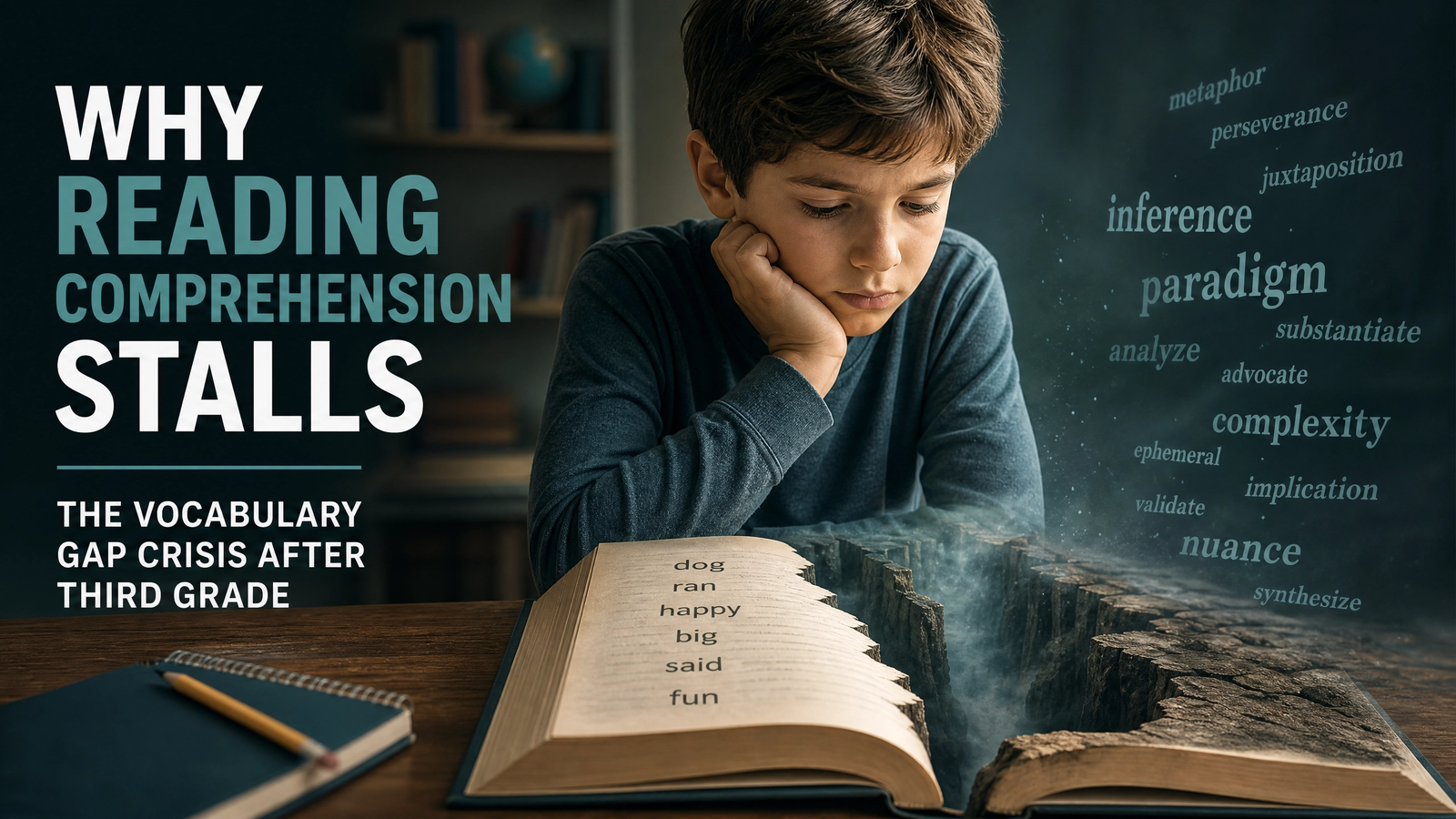
Around third and fourth grade (Years 4–5 in England), texts become longer and use more unfamiliar words. Some children who coped well in the early years start to find understanding harder. Vocabulary and background knowledge are often a big part of the picture.
In this guide
From learning to read to reading to learn
In the early years, much reading instruction is about decoding. Later, children increasingly read to learn new information, a shift often linked to Jeanne Chall’s stages of reading development. Texts introduce more subject-specific and less common words, and understanding depends more on vocabulary and background knowledge.
In the 2024 The Nation's Report Card: 2024 Reading Assessment, around three in ten US fourth-graders scored at or above “Proficient” in reading, which shows how many children could benefit from support with comprehension.
Why vocabulary matters so much
It is hard to understand a passage containing many unfamiliar words. Research on vocabulary and reading, including the National Reading Panel: Teaching Children to Read, supports teaching vocabulary both directly and through wide reading. Children also need background knowledge: a text about volcanoes is easier if you already know a little about them.
The Matthew Effect in reading
Psychologist Keith Stanovich (1986) described a “Matthew Effect” in reading: children who read well tend to read more, which builds vocabulary and knowledge, which makes reading easier still. Children who find reading hard may read less, so the gap can widen over time. This is why early, steady support with vocabulary and reading volume is valuable.
Comprehension skills check
Comprehension skills check (ages 7–9)
Tick what applies. It is a conversation aid, not a diagnosis.
0 of 6 ticked
What parents can do
- Keep reading aloud books above your child’s reading level.
- Talk about new words and use them again in conversation.
- Encourage non-fiction on topics your child enjoys.
- Ask your child to summarise what they read.
- Practise comprehension strategies such as predicting, questioning and clarifying, as recommended in the Improving Reading Comprehension in Kindergarten Through 3rd Grade practice guide.
Affiliate resource
About RTL English Level 5 (Confident Reader, ages 7–9)
According to the seller, Level 5 is a digital home learning pack of 36 printable workbooks with 2,217 exercises, 787 activities and 1,261 notes for parents, designed for children aged 7–9. We have not tested it ourselves, and individual results vary.
See RTL English Level 5 on the seller’s site →
Prices, sales and refund terms change. Check the current price and the seller’s guarantee terms before buying. This is an affiliate link: we may earn a commission if you buy, at no extra cost to you.
Frequently asked questions
Is a comprehension dip around age 8–9 common?
Many teachers and researchers describe texts becoming more demanding at this stage. Not all children experience a dip, but it is a good time to support vocabulary and reading volume.
How can I build vocabulary quickly?
There is no shortcut. Regular reading aloud, conversation and wide reading build vocabulary steadily.
Is there a guarantee on RTL English?
The seller advertises a satisfaction guarantee, but its pages show differing terms. Check the current terms before buying.
When should I seek help?
If your child consistently struggles to understand texts they can read aloud, speak to their teacher.
Affiliate resource
About RTL English Level 5 (Confident Reader, ages 7–9)
According to the seller, Level 5 is a digital home learning pack of 36 printable workbooks with 2,217 exercises, 787 activities and 1,261 notes for parents, designed for children aged 7–9. We have not tested it ourselves, and individual results vary.
See RTL English Level 5 on the seller’s site →
Prices, sales and refund terms change. Check the current price and the seller’s guarantee terms before buying. This is an affiliate link: we may earn a commission if you buy, at no extra cost to you.
Sources and further reading
- The Nation's Report Card: 2024 Reading Assessment (NAEP, grades 4 and 8)
- National Reading Panel: Teaching Children to Read (NICHD, 2000)
- Improving Reading Comprehension in Kindergarten Through 3rd Grade (IES What Works Clearinghouse practice guide)
- National Literacy Trust: support for parents and families
Last reviewed October 2026.
Disclosure: This article contains affiliate links to RTL English. If you buy through them, JNR Epic Tales may earn a commission at no extra cost to you. We have not tested RTL English ourselves; product details come from the seller’s website, and individual results vary. This article is general educational information. If you are worried about your child’s reading, speak to their teacher, school or a qualified specialist.