
Affiliate disclosure: This article contains affiliate links, including links to RTL English. If you buy through them we may earn a commission, at no extra cost to you.
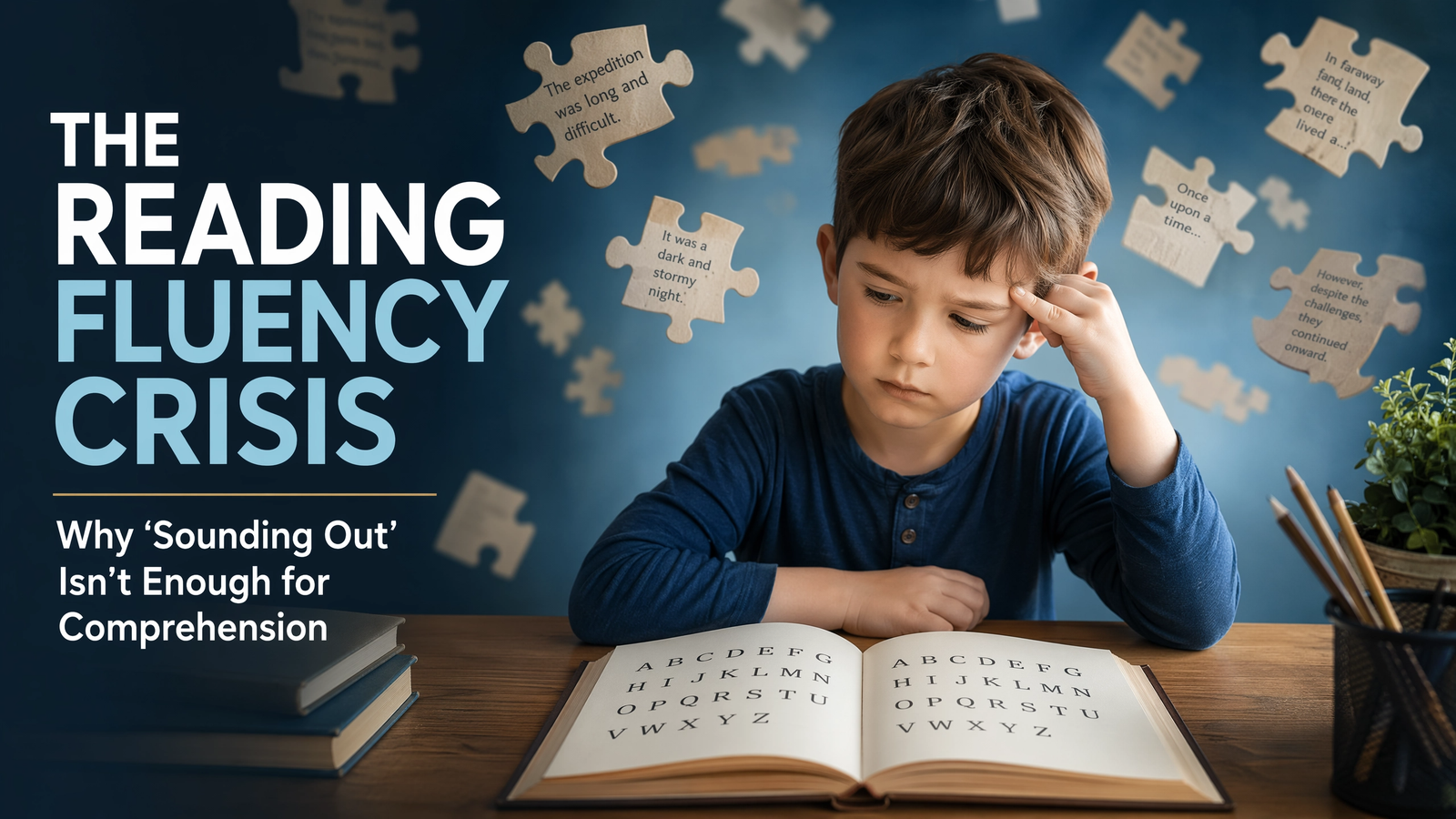
Some children can sound out almost any word, yet when they finish a page they cannot say what it was about. Often the missing link is fluency: reading accurately, smoothly and with expression.
In this guide
Decoding is necessary but not enough
The Simple View of Reading (Gough and Tunmer, 1986) describes reading comprehension as the product of word recognition and language comprehension. If word reading takes a lot of effort, there is little attention left for meaning. That is why slow, laboured reading can coexist with good decoding skills.
Fluency: the bridge
Fluency has three parts: accuracy, rate and expression (prosody). The National Reading Panel: Teaching Children to Read found that guided repeated oral reading with feedback improves fluency, and the Foundational Skills to Support Reading for Understanding in Kindergarten Through 3rd Grade practice guide recommends that children read connected text daily to support accuracy, fluency and comprehension.
Fluency self-assessment
Fluency self-assessment
Tick what applies. It is a conversation aid only.
0 of 6 ticked
How to build fluency at home
- Reread short, familiar texts over several days.
- Model expressive reading, then let your child copy you.
- Read aloud together at the same time (paired reading).
- Choose books that are easy enough to read smoothly.
- After reading, ask your child to retell the story to check understanding.
Structured practice
A structured programme can provide regular, progressive practice; pair it with real books and conversation.
Affiliate resource
About RTL English Level 3 (Early Reader, ages 5–7)
According to the seller, Level 3 is a digital home learning pack of 36 printable workbooks with 1,367 exercises, 453 activities and 1,200 notes for parents, designed for children aged 5–7. We have not tested it ourselves, and individual results vary.
See RTL English Level 3 on the seller’s site →
Prices, sales and refund terms change. Check the current price and the seller’s guarantee terms before buying. This is an affiliate link: we may earn a commission if you buy, at no extra cost to you.
Frequently asked questions
How do I know if fluency is the issue?
Signs include slow, word-by-word reading, little expression and difficulty recalling what was read, even though words are read correctly.
Will reading faster improve understanding?
The aim is comfortable, accurate reading with expression, not speed for its own sake.
How often should we practise?
Short daily practice, around 10–15 minutes, works well for many children.
Is there a guarantee on RTL English?
The seller advertises a satisfaction guarantee, but the terms shown vary. Check the current terms on the seller’s site before buying.
Affiliate resource
About RTL English Level 3 (Early Reader, ages 5–7)
According to the seller, Level 3 is a digital home learning pack of 36 printable workbooks with 1,367 exercises, 453 activities and 1,200 notes for parents, designed for children aged 5–7. We have not tested it ourselves, and individual results vary.
See RTL English Level 3 on the seller’s site →
Prices, sales and refund terms change. Check the current price and the seller’s guarantee terms before buying. This is an affiliate link: we may earn a commission if you buy, at no extra cost to you.
Sources and further reading
- National Reading Panel: Teaching Children to Read (NICHD, 2000)
- Foundational Skills to Support Reading for Understanding in Kindergarten Through 3rd Grade (IES What Works Clearinghouse practice guide)
- The Nation's Report Card: 2024 Reading Assessment (NAEP, grades 4 and 8)
- National Literacy Trust: support for parents and families
Last reviewed October 2026.
Disclosure: This article contains affiliate links to RTL English. If you buy through them, JNR Epic Tales may earn a commission at no extra cost to you. We have not tested RTL English ourselves; product details come from the seller’s website, and individual results vary. This article is general educational information. If you are worried about your child’s reading, speak to their teacher, school or a qualified specialist.