
Affiliate disclosure: This article contains affiliate links. We may earn a commission if you purchase through them, at no extra cost to you.
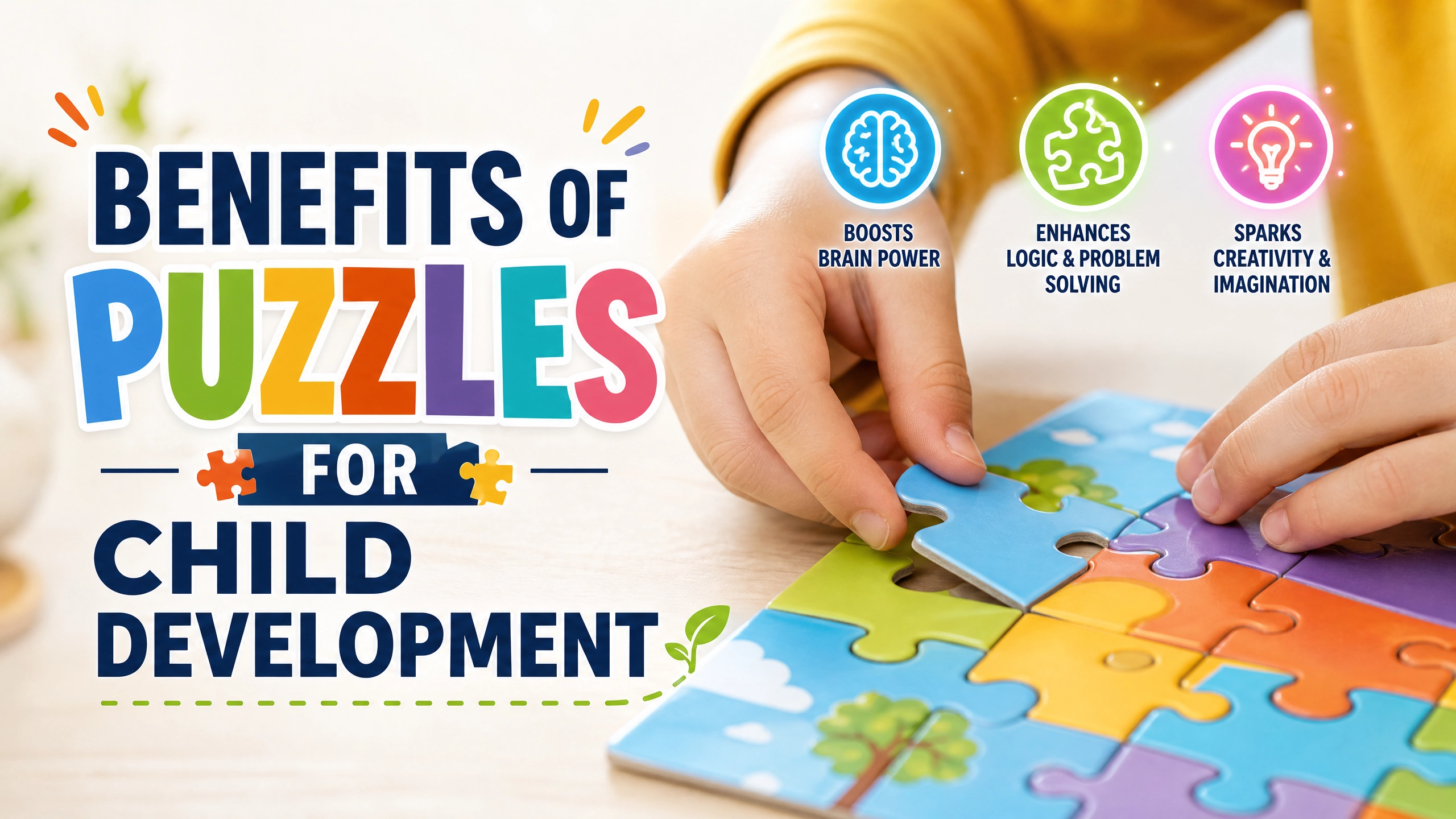
The Surprising Benefits of Puzzles for Child Development (Research-Backed)
- 5 research-backed benefits of puzzles for kids ages 7-12
- How puzzles build cognitive skills, patience, and problem-solving
- Age-appropriate puzzle recommendations
- Free printable puzzles for your child
My 8-year-old sister used to give up on everything. If she couldn’t solve a problem in 30 seconds, she’d say “I can’t” and walk away. Then my mom bought her a 100-piece puzzle of a unicorn. The first night, she sat for 10 minutes. Then 20. Then an hour. By the end of the week, she’d completed the whole thing — and she was proud.
Puzzles seem like quiet, simple activities. But research shows they’re actually powerful tools for child development. Here’s what the science says — plus free printable puzzles for your child.
Improvement in spatial reasoning after regular puzzle practice (Source: University of Chicago, 2019)
🧠 Benefit #1: Cognitive Skills & Problem-Solving
When a child tries to fit a puzzle piece, their brain is: analyzing shapes, remembering patterns, testing hypotheses, and adjusting strategies. This is executive function — the same skill used for math, reading comprehension, and planning.
The research: A 2018 study in Early Childhood Research Quarterly found that children who played with puzzles regularly scored significantly higher on spatial reasoning tests. These skills predict later success in STEM subjects.
Try this at home: Before starting a puzzle, ask: “What do you notice about the pieces? Which ones look like corners or edges?”
🧩 Benefit #2: Fine Motor Skills & Hand-Eye Coordination
Picking up small puzzle pieces, rotating them, and fitting them into place requires precise finger movements. This strengthens the same muscles used for writing, drawing, and using scissors.
The research: Occupational therapists regularly use puzzles to help children with fine motor delays. The grasping, pinching, and rotating motions build hand strength and dexterity.
Try this at home: Start with larger pieces for younger kids (ages 4-6), then move to smaller pieces as their fine motor control improves.
⏳ Benefit #3: Patience & Perseverance
Puzzles don’t offer instant gratification. Children learn that some problems take time to solve. They experience frustration — and learn to work through it.
The research: Psychologists call this “delayed gratification” and “frustration tolerance.” Both are linked to better academic outcomes and emotional regulation. A 2020 study found that children who practiced persistence with puzzles showed greater resilience in classroom settings.
Try this at home: When your child gets frustrated, say: “It’s okay to be stuck. Let’s try a different strategy. Can you find a piece with a straight edge?”
👥 Benefit #4: Collaboration & Social Skills
Working on a puzzle with siblings or friends requires: turn-taking, sharing, communicating ideas (“This piece looks like it goes here”), and celebrating success together.
The research: Cooperative puzzle-solving has been shown to increase prosocial behavior in children ages 6-9. Kids who solved puzzles together were more likely to help others in subsequent tasks.
Try this at home: Set up a family puzzle night. Assign different sections to different people. Celebrate when the last piece clicks in!
😌 Benefit #5: Stress Reduction & Mindfulness
Puzzles require focus. That focus pulls children away from screens, worries, and overstimulation. The repetitive, predictable nature of puzzles can be calming — almost meditative.
The research: Studies show that engaging in low-stakes, focused activities reduces cortisol (stress hormone) levels in both children and adults. Puzzles are particularly effective because they have clear rules and achievable goals.
Try this at home: Use puzzles during transitions (after school, before bedtime) to help your child regulate their emotions.
📊 Age-by-Age Puzzle Recommendations
| Age | Puzzle Type | Piece Count |
|---|---|---|
| 4-5 | Knob puzzles, chunky puzzles | 2-8 pieces |
| 6-7 | Floor puzzles, cardboard jigsaws | 20-50 pieces |
| 8-9 | Standard jigsaw puzzles | 60-150 pieces |
| 10-12 | Complex jigsaws, 3D puzzles | 200-500 pieces |
🆓 Free Printable Puzzles for Your Child
You don’t need to buy expensive puzzles to get these benefits. Printable puzzles work great — and they’re free!
When you sign up for our Free Downloads Library, you get instant access to:
- 10 Story Puzzles (Dragon Name Scramble, Adventure Fill-in-the-Blanks, Secret Dragon Alphabet Code, Character Crossword, and more)
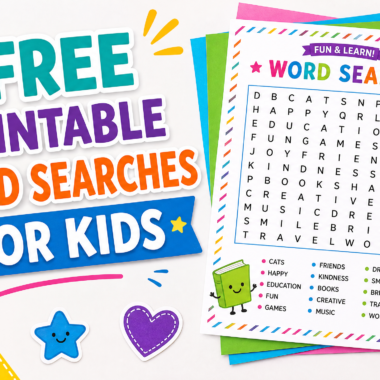
- 10 Word Searches (Dragons, Pirates, Space, Magical Creatures, Dinosaurs)
- 10 Quizzes (Personality quizzes + trivia)
- 10 Printable Activities (Design Your Dragon Shield, Comic Strip Creator, Paper Dragon Puppet, Treasure Map Maker)
📚 Get 40+ Free Printable Puzzles & Activities
Instant PDF download. Print at home. No purchase necessary.
📥 Get Free Printables Now →✅ Ages 7-12 ✅ Print instantly ✅ No spam
📌 Frequently Asked Questions
🧩 Final Thoughts
Puzzles seem simple. But they’re actually teaching your child how to think, how to persist, and how to solve problems — skills that matter far beyond the puzzle table.
My sister still does puzzles every week. She’s not giving up as easily anymore. Last month, she finished a 300-piece puzzle of a castle. She said: “This was hard. But I didn’t stop.”
That’s the real benefit of puzzles. Not the finished picture. The person your child becomes while putting it together.
Ready to start? Download 40+ free printable puzzles above. Then pour some hot chocolate, clear the table, and watch your child’s brain grow.
🎁 Download Free Puzzle Pack →— JNREPICTALES. P.S. The dragon word search is my personal favorite. Let me know which puzzle your child loves most!
Research sources:
Levine, S. C., et al. (2019). “Early puzzle play and spatial skills.” University of Chicago.
Verdine, B. N., et al. (2018). “Puzzles and executive function development.” Early Childhood Research Quarterly.
Clements, D. H., & Sarama, J. (2020). “Play, puzzles, and mathematical thinking.” National Association for the Education of Young Children.
Advertisement
Explore RTL English learning resources
RTL English sells levelled, printable reading workbooks for children, with notes for parents. Here is one level from our affiliate partner’s range.
Level 5 (Confident Reader) is aimed at children aged 7–9, according to the seller.
Advertisement · This is an affiliate link. We may earn a commission if you purchase. We have not tested this product; individual results vary. Please check the current price and the seller’s terms before buying.