
Affiliate disclosure: This article contains affiliate links. We may earn a commission if you purchase through them, at no extra cost to you.
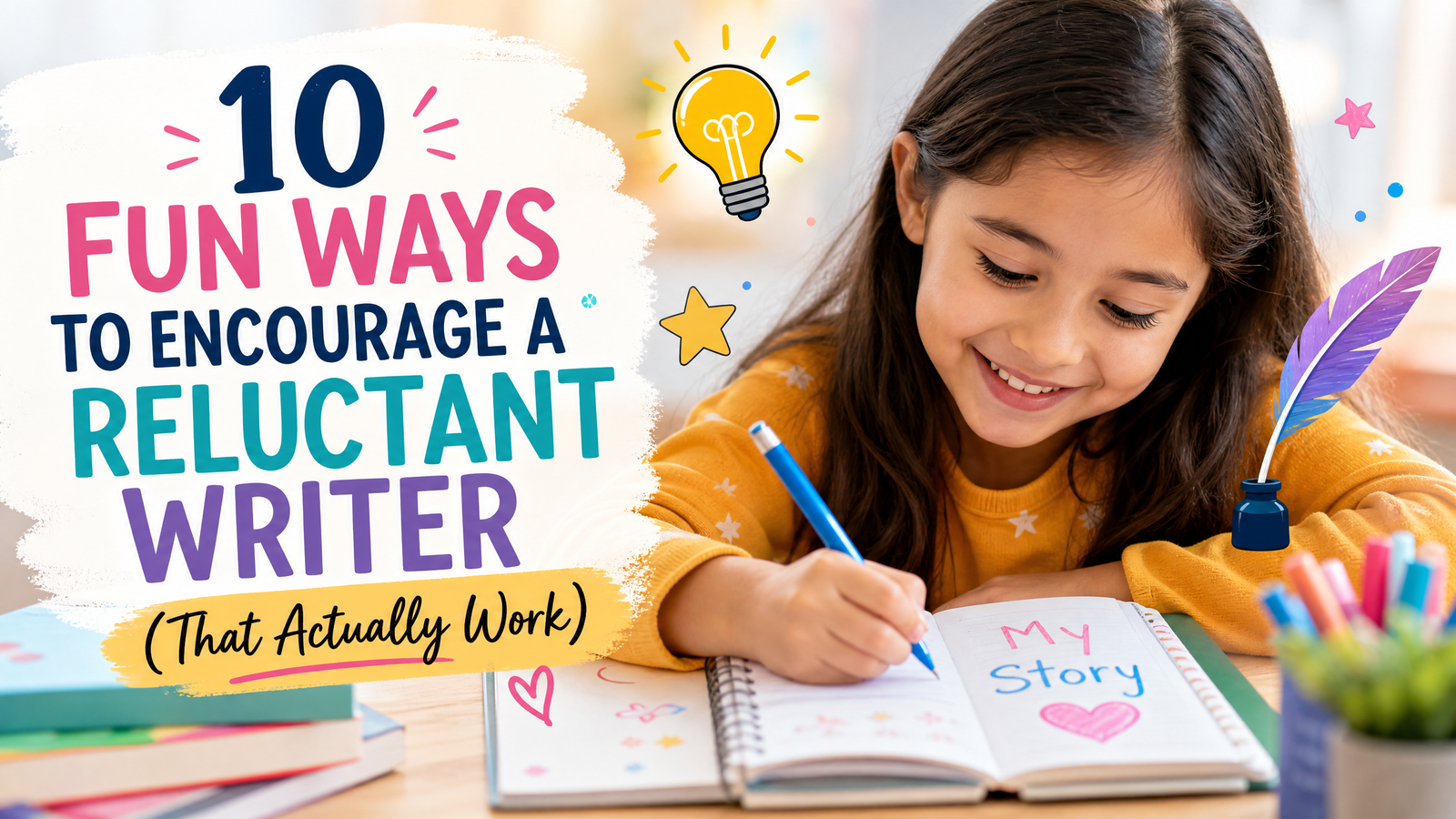
10 Fun Ways to Encourage a Reluctant Writer (That Actually Work)
Real strategies from an 11-year-old author who started with a blank page too.
- 10 low-pressure activities that actually get kids writing
- Real advice from an 11-year-old who’s published 30 books
- Free printable writing prompts (instant download)
- How to make writing feel like a game, not a chore
Imagine this: your child stares at a blank page. The cursor blinks. Minutes pass. Then comes the dreaded sentence: “I don’t know what to write.” Sound familiar? You’re not alone. I was that kid once. But now I’m an 11-year-old author with 30 published books. Here’s what actually helped me—and what will help your child too.
1. Start with the “What If” Game
Why it works: It removes the pressure of “writing” and turns it into imagination. Once they have an idea, the words come naturally.
Example from my life: “What if a robot stole my homework?” became one of my most popular books!
2. Use Speech-to-Text (No Writing Required!)
Why it works: Some kids freeze when they see a blank page. Speaking removes that barrier. Once the story is “on paper,” they can edit and rewrite.
3. Create a “Story Jar”
Example slips: “A shy dragon” + “In a floating market” + “Who lost their fire”
Why it works: The hardest part is starting. This gives them the starting point.
4. Write a Letter (Not a “Story”)
Why it works: Letters feel less intimidating than “creative writing.” They also have a real audience, which motivates kids.
5. Use Comic Strips
Why it works: Visual kids thrive with comics. The limited space per box makes writing feel manageable.
6. Read Their Work Aloud (You!)
Why it works: Hearing their words read with excitement makes writing feel powerful. They’ll want to write more just to hear you perform it.
7. Set a Timer for 5 Minutes
Why it works: The timer creates focus. The “no corrections” rule removes perfectionism. And stopping mid-sentence makes them WANT to continue.
8. Write Fanfiction
Why it works: The characters and world are already built. They just need to add the plot. It’s like training wheels for writing.
My example: I wrote a story about what happened AFTER my favorite movie ended. That story became my first published book!
9. Create a “Writing Fort”
Why it works: The environment matters. A special writing space makes writing feel like a privilege, not a punishment.
10. Celebrate ANY Writing
Why it works: Writing becomes visible. Visible = valuable. They’ll want to add more to the wall.
Enter your email below to get instant access to 20 kid-approved writing prompts (plus our entire library of free activities).
📌 Real Advice from an 11-Year-Old Author
“When I was 8, I hated writing stories for school. But I loved telling my mom about the adventures in my head. She started writing them down for me. After a while, I wanted to write them myself. Now I can’t stop!
Your child doesn’t need to be ‘good’ at writing. They just need to find a way in. For me, it was speech-to-text and comic strips. For your child, it might be something else. Keep trying different things. Something WILL click.”
— The JNREPICTALES Author, Age 11
❓ Frequently Asked Questions
A: Take a break for a week. Read great books together instead. Sometimes kids need space before they’re ready.
A: For a 7-year-old, 3 sentences is a win. For a 10-year-old, maybe 3 paragraphs. Start small. Celebrate everything.
A: YES. I’ve published 30 on Amazon KDP. It’s free and easier than you think. Start with one short story. You can do it!
Advertisement
Explore RTL English learning resources
RTL English sells levelled, printable reading workbooks for children, with notes for parents. Here is one level from our affiliate partner’s range.
Level 3 (Early Reader) is aimed at children aged 5–7, according to the seller.
Advertisement · This is an affiliate link. We may earn a commission if you purchase. We have not tested this product; individual results vary. Please check the current price and the seller’s terms before buying.