
Affiliate disclosure: This article contains affiliate links. We may earn a commission if you purchase through them, at no extra cost to you.
Dragons Around the World: Teaching Kids About Mythical Creatures
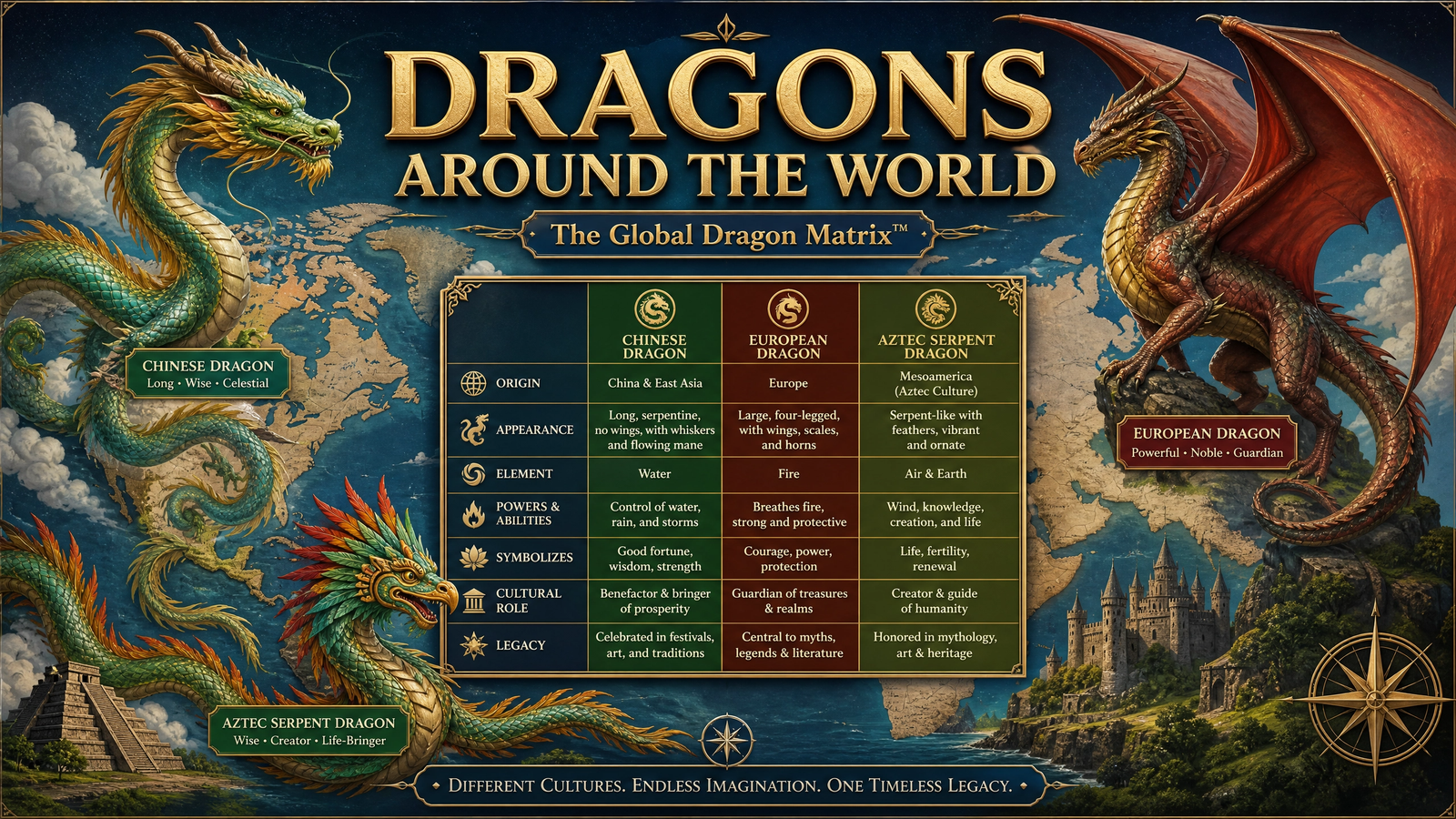
The Global Dragon Matrix™ organizes 12 mythical dragons from 7 cultural traditions across 4 dimensions: elemental affinity, moral alignment, anatomical structure, and cultural function. This framework transforms comparative mythology from a memorization exercise into an interactive discovery process. Two calculators below help learners find their dragon match and compute cultural proximity between traditions.
The Global Dragon Map™ — each marker represents a distinct dragon tradition
📊 Interactive Calculator 1: Find Your Dragon Match
🐉 What Kind of Dragon Is Your Child’s Spirit Animal?
📊 Interactive Calculator 2: Dragon Cultural Proximity
🌍 Compare Two Dragon Traditions
🏛️ The Global Dragon Matrix™: 12 Dragons, 7 Traditions
Symbol of imperial power, wisdom, and good fortune. Controls rain and rivers. No wings — flight through magic.
Two-legged, poison-tipped tail. Greedy, treasure-hoarding. Appears in British heraldry.
Three claws. Associated with sea and storms. Shapeshifting abilities.
Feathered serpent. God of wind, learning, and priesthood. Not a monster — a creator deity.
Gnaws at Yggdrasil’s roots. Represents entropy, chaos, the end of cycles.
Rainbow serpent that holds up the earth. When it shifts, earthquakes happen.
The Dragon Trait Compass
The Dragon Trait Compass™ — elemental orientation of global dragon traditions
🐉 Dragon Culture Quiz
Which dragon tradition best fits your learning style?
1. What does your child find most fascinating?
❓ Frequently Asked Questions
🔍 People Also Ask
What is the oldest dragon myth? The Sumerian dragon Kur (c. 2100 BCE) is among the oldest recorded dragon-like creatures.
Which culture has the most dragon legends? China has the most extensive dragon mythology, with the dragon as a central symbol for over 5,000 years.
Are dragons good or evil in different cultures? East Asian dragons are benevolent; European dragons are malevolent; this reflects different cultural values about power and nature.
Get the Global Dragon Matrix™ Printable Pack
Dragon cards · World map activity · Trait comparison chart
📬 SUBSCRIBE FOR FREE ACCESSAdvertisement
Explore RTL English learning resources
RTL English sells levelled, printable reading workbooks for children, with notes for parents. Here is one level from our affiliate partner’s range.
Level 4 (Independent Reader) is aimed at children aged 6–8, according to the seller.
Advertisement · This is an affiliate link. We may earn a commission if you purchase. We have not tested this product; individual results vary. Please check the current price and the seller’s terms before buying.